The laboratory develops models and tools for energy systems built on renewables, combining numerical modelling, simulation, experimental validation and spatial analysis.
The laboratory conducts research across five interconnected areas of energy systems engineering, combining numerical modelling, simulation, experimental validation and spatial analysis.
The laboratory co-developed the Smart Energy Systems framework with Aalborg University and maintains H2RES, an open-source energy planning tool deployed in 15+ countries. Work covers sector coupling, optimisation of multi-energy networks and AI-augmented planning frameworks. Tools include EnergyPLAN, Gurobi and custom machine learning models for smart energy community operation.
Approach: whole-system scenario modelling, sector coupling and optimisation, applied from single islands to national energy plans.
Research covers CFD modelling of spray and multiphase combustion using AVL FIRE, characterisation of alternative and biogenic fuels, green ammonia co-firing, CO₂ capture from flue gases and particulate matter formation. The group works directly with engine and process industry on simulation-led development, and runs bilateral research on fine particle control and flue gas treatment.
Approach: simulation-led fuel and combustion development, validated against laboratory and industrial measurements.
The group applies GIS-based spatial modelling to heat demand mapping, district heating network planning and identification of low-grade renewable and waste heat sources. Process integration work uses Total Site Analysis, Aspen/UniSim and P-graph optimisation for industrial energy systems. The laboratory contributed to the 4th Generation District Heating framework through the 4DH project (2012–2017) with Aalborg University.
Approach: spatial heat demand mapping and network design, from a single industrial site to a whole city.
The laboratory works on offshore wind resource assessment, grid integration studies and regulatory mapping for enclosed seas, alongside biorefinery pathways for renewable fuels and feedstocks. A parallel strand models freshwater and marine ecosystems under climate and human pressure: wetland restoration, fish migration, sediment transport and sustainable aquaculture coupled with renewable energy.
Approach: resource and environmental assessment for coastal, marine and river systems, linked to renewable deployment.
Research addresses coordinated storage architectures across short and long time scales: batteries, thermal stores and hydrogen buffers in multi-energy networks, using data-driven and machine learning approaches. A second strand covers building energy renovation at scale, industrial decarbonisation pathways for hard-to-abate sectors and transport electrification modelling.
Approach: storage and flexibility modelling across time scales, from a single building to an industrial sector.
Lab members sit on the editorial boards of leading journals in energy systems, environment and sustainability, and regularly review for them. Click a journal to visit it.
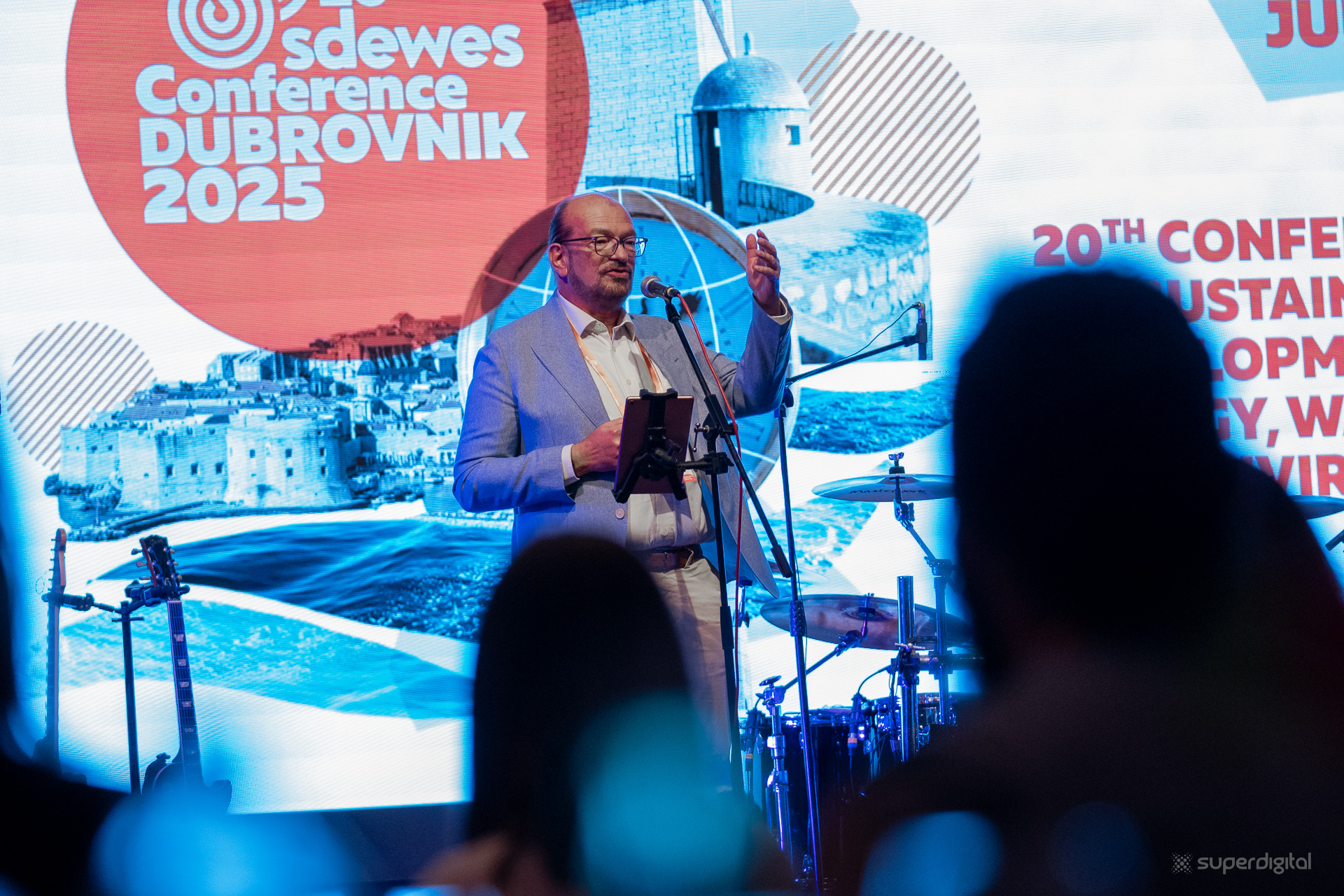
The Sustainable Development of Energy, Water and Environment Systems (SDEWES) Conference is a globally recognised venue for energy transition research. Several PowerLab members serve on its organising and scientific committees.
 Annual International Conference
SDEWES brings together researchers from around the world each year, with conferences held at changing locations worldwide. PowerLab members contribute to its organising and scientific committees.
Visit SDEWES.orgA selection of recent peer-reviewed work from the lab, spanning energy system modelling, combustion, district heating, and marine-energy systems.
We collaborate on Horizon Europe, LIFE, Interreg and bilateral projects, and we're always open to new consortia. If your organisation works on energy modelling, decarbonisation or smart energy systems, let's talk.
 Hrvatski
 English